Pipe diameter plays a major role in how quickly water moves through household plumbing. Understanding this relationship helps homeowners recognise pressure changes, choose suitable pipes, and avoid flow problems today.
Larger pipes generally allow more water to pass with less resistance, while smaller pipes restrict movement. However, pipe size works alongside pressure, length, fittings, and elevation inside homes at home.
Inside a home, water rarely travels through one continuous pipe. It passes through branches, valves, elbows, connectors, and appliances, each adding resistance that affects overall flow under normal household conditions.
Choosing the right diameter is therefore about balance rather than simply selecting the largest available pipe. Good plumbing design matches pipe size with expected household demand effectively in many homes.
Small diameter pipes provide less space for water to travel, increasing resistance as flow rises. This can become noticeable when several taps, showers, or appliances operate simultaneously in many homes.
A narrow pipe may deliver acceptable flow to one fixture, yet struggle when another outlet opens. The available water must share the same supply capacity across connected branches at home.
Long runs of narrow pipe can make restrictions more noticeable because water encounters resistance throughout its journey. Distance, bends, and internal surfaces can further reduce useful flow in many homes.
Older homes sometimes contain pipework that was designed around lower water demand. When modern households add powerful showers, dishwashers, and multiple bathrooms, smaller pipes can become limiting in many homes.
Larger pipes usually reduce friction because water has more room to move through the internal passage. This can support stronger flow, particularly across longer household supply runs in many homes.
However, installing larger pipes does not automatically create higher pressure. Pressure depends on the incoming supply and system conditions, while diameter mainly influences how easily water can flow at home.
A properly sized larger pipe can help maintain flow when several fixtures operate together. This makes everyday activities such as showering, washing, and filling appliances more consistent in many homes.
Very large pipes can also be unnecessary and expensive. They require more material, may hold more water, and can take longer to deliver hot water to fixtures in many homes.
Pipe length matters because water loses energy as it travels. A small diameter combined with a long run can create noticeably greater resistance than a short connection in many homes.
For this reason, plumbers consider both distance and diameter when planning domestic water systems. A suitable size near the supply may need adjustment for distant fixtures in practice.
Long pipe routes may include several direction changes, connections, and valves. Each component can contribute additional resistance, making the combined effect more important than diameter alone in many homes.
Homeowners noticing weak flow at a distant bathroom may therefore need more than a simple pipe replacement. The complete route should be assessed to identify the actual restriction at home.
Showers often reveal pipe sizing problems because they require a steady supply of water. A restricted branch can cause disappointing performance, especially when another fixture is opened in many homes.
Kitchen and bathroom taps can also respond to changes in available flow. If multiple outlets share a small supply pipe, each may receive less water than expected in many homes.
Temperature can become harder to control when flow changes suddenly. This is particularly noticeable with showers that rely on balanced hot and cold water supplies during use in many homes.
Correctly sized branches help fixtures receive enough water without unnecessarily reducing performance elsewhere. Good design considers the expected demand from each bathroom, kitchen, utility area, and appliance in many homes.
Household plumbing must often serve several fixtures at once. Someone may shower while a washing machine fills and another person uses a kitchen tap nearby for most households during use.
When these demands overlap, available flow is divided among connected branches. Pipe diameter becomes increasingly important because undersized sections can create greater resistance throughout the system for most households during use.
The main supply pipe generally needs enough capacity for expected simultaneous demand, while individual branches can be sized according to the fixtures they serve directly for most households during use.
If flow drops whenever several outlets operate, the issue may involve pipe sizing, pressure, a partially closed valve, or another restriction. Professional testing can identify the cause in many homes.
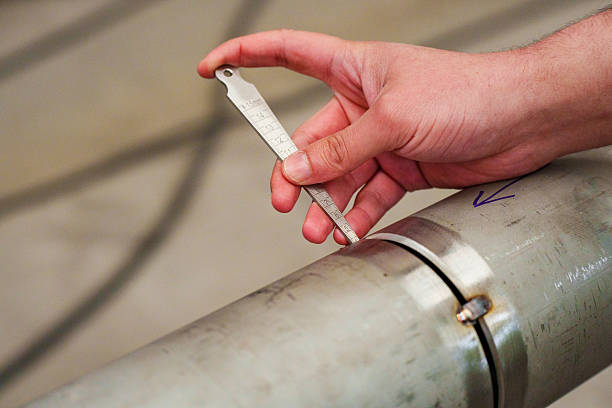
Two pipes described by the same nominal size may not have identical internal dimensions. Material, wall thickness, and manufacturing standards can influence the actual passage available for most households during use.
Internal pipe surfaces also affect resistance. Roughness, corrosion, mineral deposits, and scale can reduce the effective opening, meaning an older pipe may behave like a smaller one in many homes.
Plastic and metal systems can therefore perform differently even when their stated sizes appear similar. Correct comparisons should consider the internal diameter and pipe specifications for most households during use.
Replacing old plumbing with modern materials can improve flow when existing pipes are restricted. However, the replacement should be properly sized rather than chosen solely for appearance in many homes.
Pipe diameter cannot be considered separately from water pressure. A generous pipe may carry water efficiently, but insufficient incoming pressure can still limit performance at household fixtures in many homes.
Elevation also matters because water must overcome gravity when travelling to higher floors. Upper bathrooms can therefore experience different flow conditions from fixtures located closer to the incoming supply today.
In tall homes, careful pipe sizing can help reduce additional losses, but it cannot remove the effect of elevation completely. System pressure must remain suitable for the building at home.
These factors explain why two houses with similar plumbing layouts can experience different flow. Supply pressure, elevation, pipe diameter, length, and fittings all influence performance together for most households during use.
Selecting pipe diameter should begin with the home's expected water demand rather than a single fixture. Bathrooms, kitchens, appliances, and outdoor outlets may all contribute to demand in many homes.
A qualified plumber can assess the supply, existing pipework, pressure, distances, fittings, and fixture requirements. This provides a more reliable basis for selecting suitable replacement sizes for most households during use.
During renovations, increasing pipe diameter may be worthwhile where future demand is expected to grow. Planning ahead can reduce the need for disruptive plumbing changes later for most households during use.
Good sizing aims for dependable flow without excessive material use. The objective is a balanced system that delivers water efficiently, responds well to simultaneous demand, and remains practical at home.
Even correctly sized pipes can develop flow problems as plumbing ages. Deposits, corrosion, damaged fittings, and partially closed valves may gradually reduce the available passage for most households during use.
Regular attention to leaks and unusual pressure changes can help homeowners identify developing problems earlier. A sudden reduction in flow should not automatically be blamed on pipe diameter at home.
Where older plumbing is being upgraded, checking the complete system can reveal whether restrictions occur within supply pipes, valves, fixtures, or connections between different sections for most households during use.
Understanding pipe diameter helps homeowners make better decisions about repairs and upgrades. When sizing, pressure, length, materials, and household demand are considered together, water flow becomes more predictable at home.

This post has been authored and published by one of our premium contributors, who are experts in their fields. They bring high-quality, well-researched content that adds significant value to our platform.












Plumbing Guide provides practical plumbing tips, helpful guides, maintenance advice, and easy-to-understand information for homeowners and DIY enthusiasts.